Cell Tower Lease Rates 2026: The Landowner's Guide, Backed by 300,000+ U.S. Cell Sites
Last updated: August 2026. By Hugh Odom, Founder of Vertical Consultants. Former AT&T attorney with more than 25 years in telecom lease negotiations.
A cell tower lease is a legally binding real estate agreement between a property owner and a wireless carrier or tower company that grants equipment placement rights in exchange for monthly rent. In 2026, those rates range from $500 a month for a rural, single-tenant ground lease to $6,500 and up for a multi-carrier urban rooftop, based on Cell Tower AI's database of 300,000+ U.S. cell sites. Vertical Consultants represents landowners only. We don't take a dollar from carriers or tower companies, and the renewals and new leases we negotiated in 2024 produced an average immediate rent increase of 308%.
The short version:
- Cell tower lease rates in 2026 run from $250 a month for a small 5G cell up to $6,500 or more for an urban rooftop. Full breakdown below.
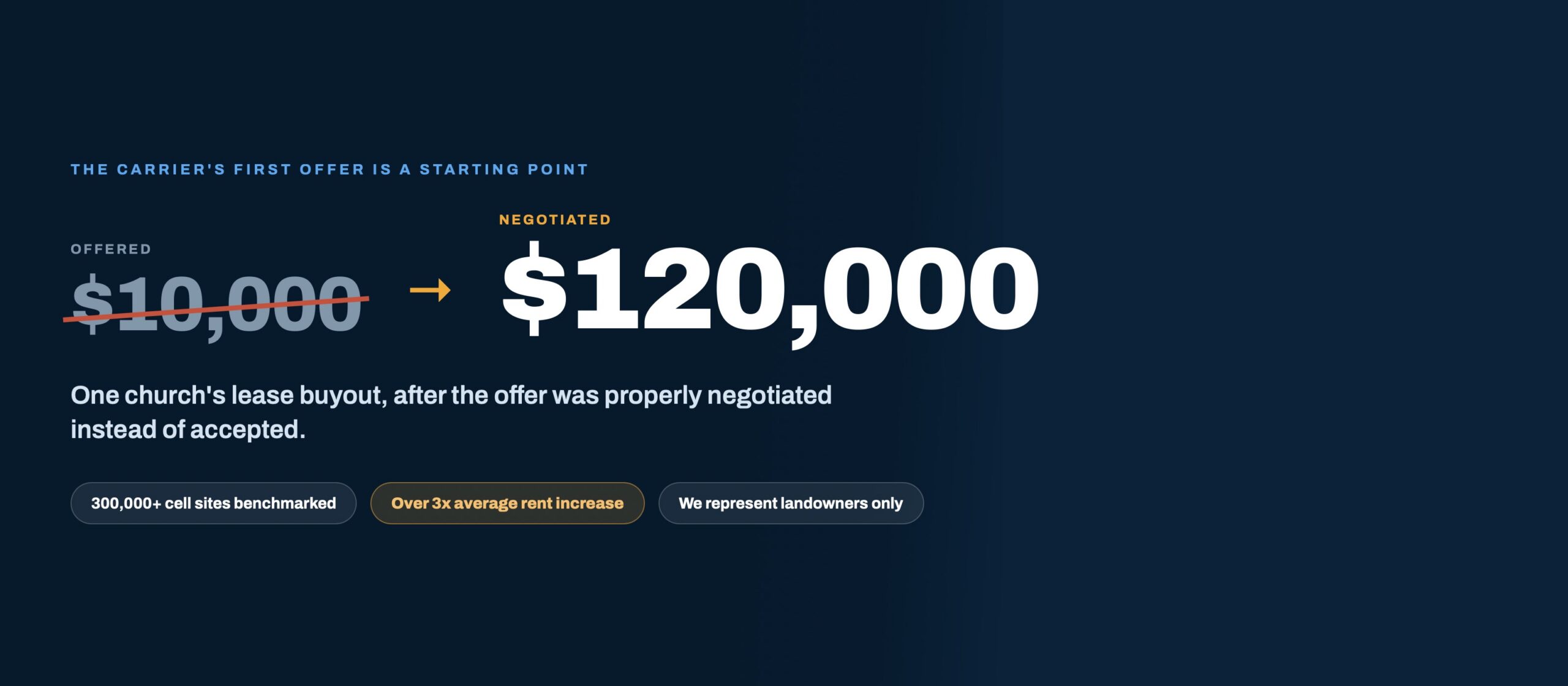
- A carrier's first offer is a starting point, not a fair market value. One church we worked with, Shanita Johnson's, saw a renewal offer go from $10,000 to $120,000 once negotiations started (details below).
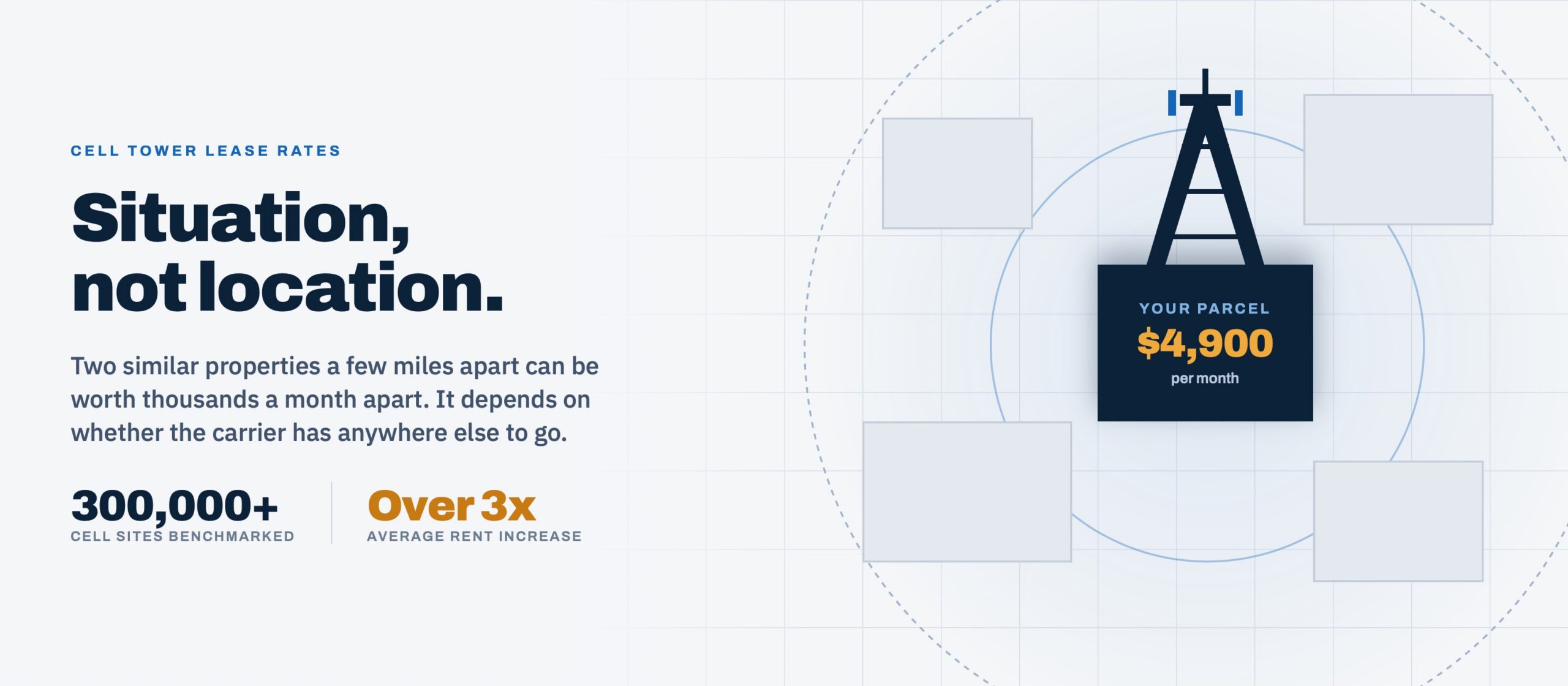
- Rent is set by network necessity, not square footage. Two similar properties a few miles apart can land offers that differ by thousands of dollars a month.
- Most cell tower leases run 30 to 50 years once you count the automatic renewals. Over that kind of timeline, a weak escalation clause does more damage than a low starting rent.
- Buyout offers get priced as a multiple of annual rent, and there's no published standard multiple. Tenancy, remaining term, and relocation risk all move the number.
2026 Cell Tower Lease Rates by Site Type
Cell tower rent doesn't work like standard real estate. A carrier isn't paying for square footage. It's paying to solve a network problem, and the price depends on how badly it needs your particular piece of land to solve it. That's why the ranges below are wide. The same site type can pay five to ten times more at the top of the range than at the bottom.
| Site Type | Est. Monthly Rent (2026) | Key Value Driver |
|---|---|---|
| Urban Rooftop | $2,500 to $6,500+ | Building height and lack of nearby alternatives |
| Suburban Macro Tower | $1,200 to $3,000 | Zoning difficulty and carrier density |
| Rural Ground Lease | $500 to $1,800 | Topography and proximity to highways |
| 5G Small Cell | $250 to $900 | High-frequency coverage needs in dense areas |
Where this data comes from
These numbers come from Cell Tower AI's database, which tracks more than 50,000 lease agreements across 300,000+ U.S. cell sites, pulled fresh for Q2 2026. The gap between the lowest and highest rents for comparable site types has widened since 2024. Part of that is the 5G mid-band build-out, which made certain locations much harder for carriers to swap out for a nearby alternative.
Will Starlink Direct-to-Cell Tech Affect Your Cell Tower Lease & Rates?
With wireless carriers partnering with low-Earth orbit (LEO) satellite providers, such as T-Mobile's integration with SpaceX’s Starlink Direct-to-Cell, many property owners ask: Will satellite technology make my physical cell tower lease obsolete or lower my rent rates?
The short answer is no. Satellite-to-cell technology is designed to complement ground-based macro sites, not replace them. However, tower companies and carriers frequently use tech shift rhetoric during negotiations to create uncertainty and pressure landlords into taking below-market lease extensions or lower rent rates.
Macro Cell Sites vs. Direct-to-Cell Satellites
| Factor | Ground Macro Towers (Your Site) | Starlink / Direct-to-Cell Satellites |
|---|---|---|
| Primary Function | High-capacity 5G/6G data, streaming, dense coverage | Emergency text, voice, and baseline connectivity in remote dead zones |
| Bandwidth Capacity | Gigabits per second per site (Handles tens of thousands of connections) | Megabits per second per beam (Limited spectrum per satellite) |
| Impact on Lease Value | High Retention Value: Crucial for urban, suburban, and traffic corridors | Supplemental Role: Reaches places where building a physical tower is impossible |
How Satellite Tech Affects Your Cell Tower Lease Value
- Carrier Leverage Tactics: Representatives often cite emerging technology to argue that ground sites are losing value. Cell tower lease consultants regularly see these tactics used to secure long-term extensions before property owners realize the true value of their site.
- Macro Site Dependability: Dense populations and high data consumption demand physical infrastructure. Direct-to-cell tech cannot deliver the physical capacity required for daily streaming and mobile network usage.
- Data-Driven Negotiations: Protecting your rent rates requires looking at your specific site’s network revenue contribution—not generalized industry claims.
Is a carrier using tech changes to negotiate down your lease?
Leverage Cell Tower AI and expert analysis to uncover the real value of your specific location before signing any extension or buyout agreement.
Vertical Consultants: The most trusted name in Cell Tower Lease news.
The nation's top news outlets turn to Hugh Odom for cell tower lease expertise. Click below to see interviews on NBC, Fox, & more.







Grade Your Cell Tower Lease in Under a Minute
You can check whether your rent is competitive against agreements in your area in under 60 seconds. The tool grades your lease from A to F, using the same 50,000+ agreement, 300,000+ site database behind the numbers on this page.
Why Landowners Hire a Cell Tower Lease Consultant
Carriers and tower companies negotiate leases every single day, in every market in the country. Most landowners see one offer, maybe two, in their entire lifetime. That gap in experience is where deals go sideways, and it's the reason Vertical Consultants exists.
Take Ed Freeman, Managing Partner of StorPlace Self Storage. His company had cell tower leases running across several of its 16 locations. He let Hugh Odom look through the agreements mostly out of curiosity, not expecting much to come of it. What Hugh found was unpaid rent and unpaid expenses buried in the paperwork that StorPlace had been owed for years. That's not a rate negotiation. That's money already earned and never collected, sitting in a lease document nobody had audited.
A few things worth knowing about how we work:
- We represent property owners and leaseholders only. We never work for, or take a fee from, a tower or telecom company.
- Hugh Odom, our founder, spent more than 25 years on the other side of the table as an AT&T attorney before starting Vertical Consultants.
- Our 2024 negotiated deals averaged a 308% immediate rent increase over the carrier's opening offer.
- The Wall Street Journal profiled Hugh as the "Property Deal Maker" in its People of 5G feature, covering how landowners can hold their own against carriers.
What Actually Determines Your Cell Tower Lease Value
Network necessity: it's about the situation, not the location
There's no such thing as a comparable sale in cell tower leasing. A carrier isn't buying land value. It's buying a fix for a specific network problem, and what it will pay depends entirely on how badly it needs that fix.
Carriers work within a search ring, the area where a new site can hand off traffic to the surrounding network. In a dense city grid, that ring might only be a quarter mile across. In rural terrain, it can stretch to five miles. If your property is one of eight workable parcels inside that ring, the carrier has options and the offer will reflect it. If zoning, terrain, or utility access rules out every other parcel, yours might be the only site that works, and the offer should reflect that instead. Most opening offers get priced as though alternatives exist, whether they actually do or not.
The three factors that move the number
- Permitting. A jurisdiction with strict special-use requirements makes every approved site harder to replace, so carriers pay more there, no matter how big or small the population is.
- Construction cost. Level ground with easy access and power nearby is cheap to build on. Carriers will pay more rent to avoid a costly build on the lot next door.
- Tenancy. A tower carrying multiple carriers generates several rent streams for the tower company. Whether you see any of that extra revenue depends entirely on how your lease is written.
That last point mattered a lot to Russel Green. He inherited a property from his grandmother that had carried a cell tower since 1995. At one point, someone had visited his grandmother, then in her 80s, and talked her into cutting her rent in half by threatening she'd lose the tower altogether if she didn't agree. When Russel inherited the lease with six years left on the term, he brought in Vertical Consultants. The result was three times the rent, a yearly escalator his grandmother's original lease never had, and language guaranteeing him a cut if the tower company ever adds another carrier to the structure. His grandmother's lease had no such protection, and she never saw a dime of that upside.
Cell Tower Lease Buyouts
A lease buyout converts your future rent into one lump-sum payment, usually priced as a multiple of your annual rent. Aggregators like American Tower's buyout arm, AP Wireless, and Unison call leaseholders constantly, because the rent stream is almost always worth more than the owner assumes.
Shanita Johnson found this out when her church's lease came up for renewal. The tower company's first offer was $5,000. When the church didn't jump on it, the offer moved to $10,000. Shanita, a project manager who handles negotiations for a living, told her pastor she'd be doing the church a disservice by trying to handle this one herself. Vertical Consultants took over the negotiation, and the offer went from $10,000 to $120,000.
A few things to keep in mind before you respond to a buyout letter:
- The multiple a buyer opens with is never the ceiling. There's almost always room above it.
- Whether a buyout makes sense depends on tax treatment, your plans for the property, and what protections remain in the current lease. Whether the price itself is fair depends on tenancy and term, which is exactly what our database benchmarks against completed deals.
- A standing Right of First Refusal clause in your existing lease will suppress what outside buyers offer. It's one of the first things we try to remove during a renewal.
Types of Cell Tower Leases
Ground leases
A ground lease uses a defined section of land for a tower and its equipment, usually a fenced compound, an access road or easement, and utility routes. Ground leases tend to be the most valuable type because they can support several carrier tenants on one tower.
Rooftop leases
A rooftop lease puts antennas and equipment on top of a building. Office buildings, apartment complexes, and municipal buildings are the most common hosts. These leases need to address structural load, access routes, ongoing maintenance, and how the equipment affects future work on the building.
Monopole vs. lattice towers
A monopole is a single vertical pole. A lattice tower uses a three or four leg frame. The type affects height, how many tenants the structure can carry, and how likely it is to be expanded down the road, all of which feed into what the lease is worth.
DAS and small cell leases
Distributed antenna systems and small cell installations fill coverage gaps or add capacity, usually in dense areas. They pay less per site than a full tower, but the rights granted often extend well past the physical equipment location, so they still deserve a careful read.
Mistakes Landowners Make With Cell Tower Leases
Taking the first offer as final. Melody Scott was approached by Verizon about building a new tower on her family's commercial property. She had some experience already, but knew enough to recognize she needed an expert for the actual negotiation rather than taking the initial number. She didn't commit to Verizon's opening offer, brought in Vertical Consultants, and ended up with a meaningfully better rate and terms than what was first on the table.
Focusing only on the monthly rent. Escalation rates, renewal terms, colocation rights, termination rights, and easements all matter more than people expect over a lease that can run 30 to 50 years. A lease with slightly higher rent but weak protections often loses to one with lower rent and better terms.
Overlooking amendments. An amendment that adds equipment or changes rights can quietly expand the site's footprint or hand the carrier more control over your property. Treat every amendment as a fresh negotiation, not paperwork to sign and file away.
Granting broad, undefined easements. Vague access rights or open-ended expansion language can get in the way of a building addition, a subdivision, a road relocation, or a future sale. These rights need to be mapped clearly and limited to what's actually required.
How the Cell Tower Leasing Process Works
- Site identification. A carrier spots a coverage gap and picks a candidate property.
- Letter of Intent. The carrier sends a preliminary offer with proposed rent and term length.
- Lease negotiation. Both sides work out the legal protections: escalation clauses, access rights, and the rest.
- Due diligence. The carrier runs environmental audits, structural tests, and zoning reviews.
- Execution. The contract gets signed, and rent typically starts once construction is done.
How to negotiate a lease renewal
- Audit the site. Confirm what equipment is actually on the property and whether the carrier is complying with the existing lease.
- Check network necessity. Find out whether the carrier has real alternative sites nearby, or whether yours is the only one that works.
- Cut the bad clauses. Right of First Refusal and "termination for convenience" language should come out wherever possible.
- Fix the escalator. Push for rent that compounds annually instead of stepping up every five years.
Cell Tower Lease FAQs
How much does it pay to have a cell tower on your property?
Between $500 and $6,500 or more a month in 2026, depending on site type. Rural ground leases sit at the low end, multi-carrier urban rooftops at the top, based on Cell Tower AI's database of 300,000+ U.S. cell sites. The exact number for your property comes down to how few alternatives the carrier has, which is why two similar parcels can land offers thousands of dollars apart. Run your address through the Lease Grader to see where you fall.
How long does a typical cell tower lease last?
Thirty to fifty years in practice, once you add the initial term to the automatic renewal periods. A lease pitched as a five-year agreement with nine five-year renewal options is really a fifty-year commitment for the landowner, because only the carrier can decide not to renew. The term structure is negotiable, and it should be priced like anything else in the deal.
How often does cell tower rent increase?
Most current leases escalate by a fixed annual percentage, or by a step of 10% to 15% every five years. Some older leases have no escalator at all. Annual compounding is worth noticeably more over a lease that runs decades, which is exactly why carriers prefer to offer the five-year step instead. If your lease has flat rent with no increase built in, that alone is usually reason enough to look at a renegotiation.
Can I renegotiate an existing cell tower lease?
Yes, but generally only at specific moments: a renewal window, an equipment upgrade or amendment request, a rent reset, or a buyout approach. Outside of those moments, you have limited leverage because the carrier doesn't need anything from you. Russel Green's story is a good example. He waited until he had inherited the lease and had a clear window before negotiating, and walked away with triple the rent and a yearly escalator his grandmother's lease never had.
Can my cell tower lease be bought out, and should it be?
Yes, any lease can be bought out. Aggregators price offers as a multiple of annual rent and will keep contacting you. Whether selling makes sense depends on the price relative to the stream's real value, the tax outcome, and your plans for the property. Shanita Johnson's church went from a $10,000 offer to $120,000 once the offer got properly negotiated instead of accepted at face value.
Who owns the tower and equipment on my property?
The tower company or carrier owns the structure and equipment. You own the land or building, subject to whatever rights the lease grants. The practical issue is scope creep: what the lease grants often exceeds what actually got built, and unused expansion rights still sit on your property. A site audit against the lease language, the kind that turned up unpaid revenue for Ed Freeman at StorPlace, is how you find that gap.
Does a cell tower lease affect selling or financing my property?
Yes. The lease is a recorded property interest, and buyers and lenders will price it into any deal. A well-structured lease with strong escalators adds value as an income stream. Broad easements, expansion rights, or a Right of First Refusal clause can complicate a sale or a refinance. Get the lease reviewed before you list the property, not while you're already in diligence.
Why Landowners Trust Vertical Consultants
The Wall Street Journal called Hugh Odom the "Property Deal Maker" in its People of 5G feature. He's also appeared on NBC, Fox, MSNBC, Cheddar, ABC, Yahoo Finance, and NewsNation talking about cell tower leases and what property owners are up against.
What we bring to a negotiation:
- Thousands of cell tower lease negotiations and reviews behind us
- A close read of lease language, site control, and what the property is worth over the full term
- Data-backed guidance on rent, escalators, and buyout decisions
- Representation that only ever answers to the landowner, never the carrier
We've negotiated more than $1,000,000,000 in cell tower rent for individual landowners, churches, self storage operators, municipalities, financial institutions, and commercial property owners across the country.
How does the cell tower leasing process work?
The process of securing or renewing a lease follows a standard technical and legal sequence:
- Site Identification: A carrier identifies a "gap" in coverage and selects a candidate property.
- Letter of Intent (LOI): The carrier issues a preliminary offer outlining proposed rent and term lengths.
- Lease Negotiation: Both parties negotiate legal protections, including escalation clauses and access rights.
- Due Diligence: The carrier performs environmental audits, structural tests, and zoning reviews.
- Execution: The final contract is signed, and rent payments typically commence upon construction.
- A Better Offer
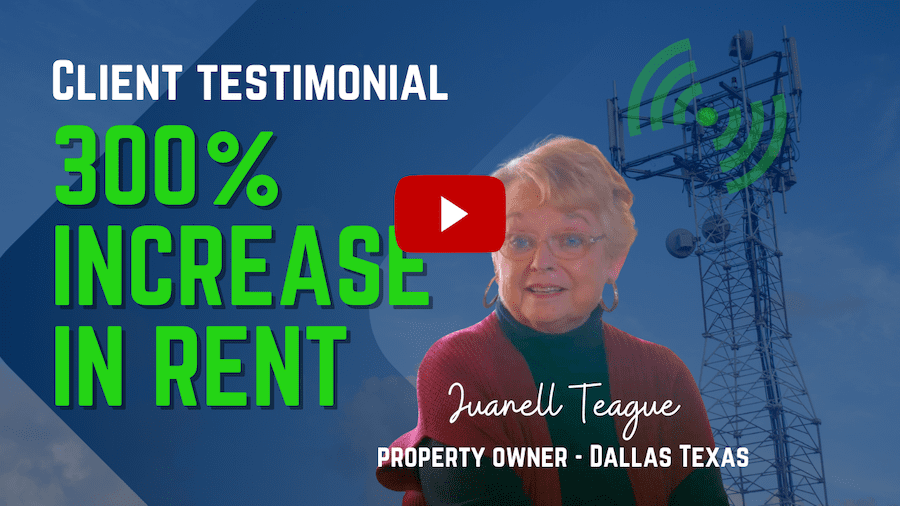
- Our clients on average over a 3x increase in rent.
- More Money For Years To Come
- We fight for valuable rent increases.
- Protect Your Land & Your Rights
- Many property owners are suprised when they find out how much control they've given up on their land.
What Is Cell Tower AI?
Cell Tower AI Can:
UNLOCK more cell tower rent
RED FLAG risky lease terms
RECOVER expenses owed to you
If you’re not leveraging Cell Tower AI, you’re leaving money on the table.

Cell Tower Rent Rates by State
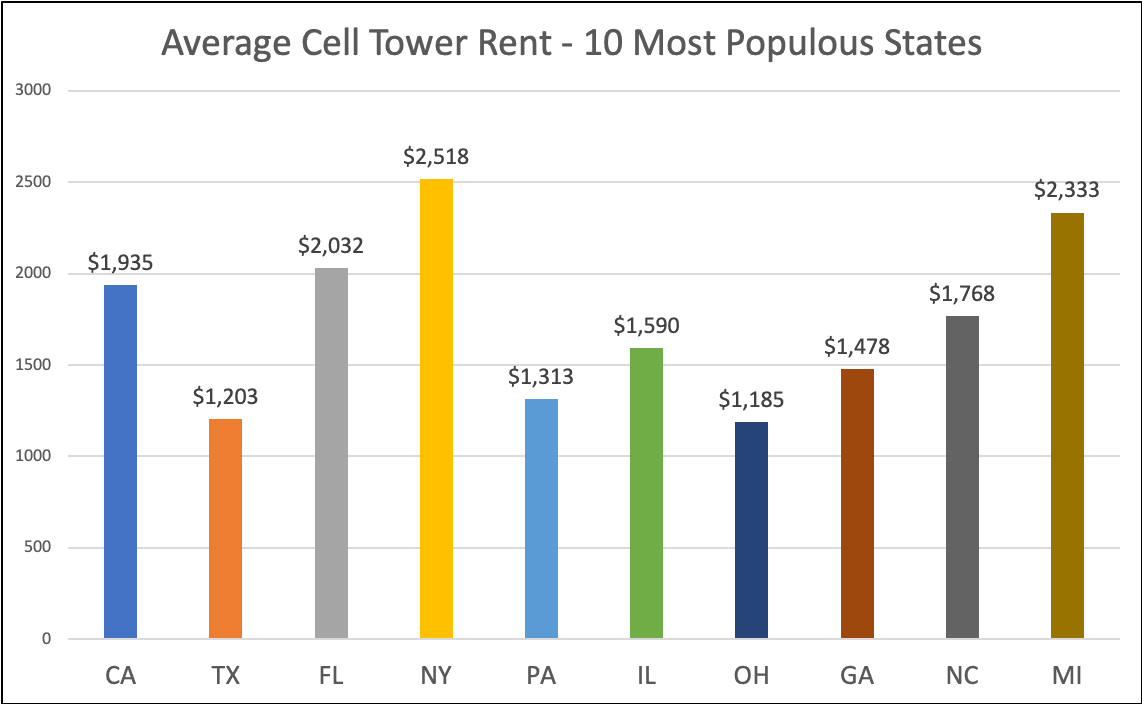
This chart shows the average rent rate by state for the 10 most populous states. While this data is useful, it should not be your only tool used to determine your monthly rent. This is simply an average of all carriers and tower companies.
To determine the real value of your land as a cell site, you need to consider many other factors, which we discuss below.

Pros & Cons of Cell Tower Leases
Cell tower leases have become a common practice in today’s wireless communication industry. However, there are both advantages and disadvantages associated with cell tower leases that property owners should carefully consider before entering into such agreements.
Watch the video to learn more or click here to read the article.
📡 Instantly Grade Your Cell Tower Lease — and Unlock Hidden Value
✅ Find out in LESS THAN 60 SECONDS whether your rent is competitive
✅ See how your lease stacks up against others in your area
✅ Get a grade (A to F) based on over 50,000 cell tower agreements and over 300,000 cell sites across the U.S.
Cell Tower Lease Case Studies & Client Testimonials
"Vertical Consultants Gave Us Answers & Got Results."

Melody Scott
Verizon wanted to put a tower on our land.

Ed Freeman
To my surprise, we were owed money.

Gina Martin
My business needed help with a phone tower lease.

Shanita Johnson
My church got an amazing buyout.

Russel Green
I inherited property with a cell site on it.
Vertical Consultants: "They are your cell tower lease experts."
Vertical Consultants represents property owners and leaseholders, putting their interests first. Unlike others, we never work for or take compensation from tower or telecom companies. Click here to learn more.
What Is The True Value Of Your Property?
We will not only provide you expert consultation -- we will work with you throughout the entire lease transaction, and we only benefit if you benefit. In fact, that’s our motto. We’re that confident in the services we provide.